
Selected work · 2026
Selected work
Apps, systems,
and the sites that front them.
Software we have built and software you can use. Four desktop apps, a live production system you can sign into, thirteen working prototypes built for specific trades and practices, and five brand sites. Every prototype is a clickable interface: navigate it, open records, sort, filter, and switch roles to watch permissions change.
Apps
Software, built in-house.
Desktop applications built by Templeton Group for macOS.
Desktop app
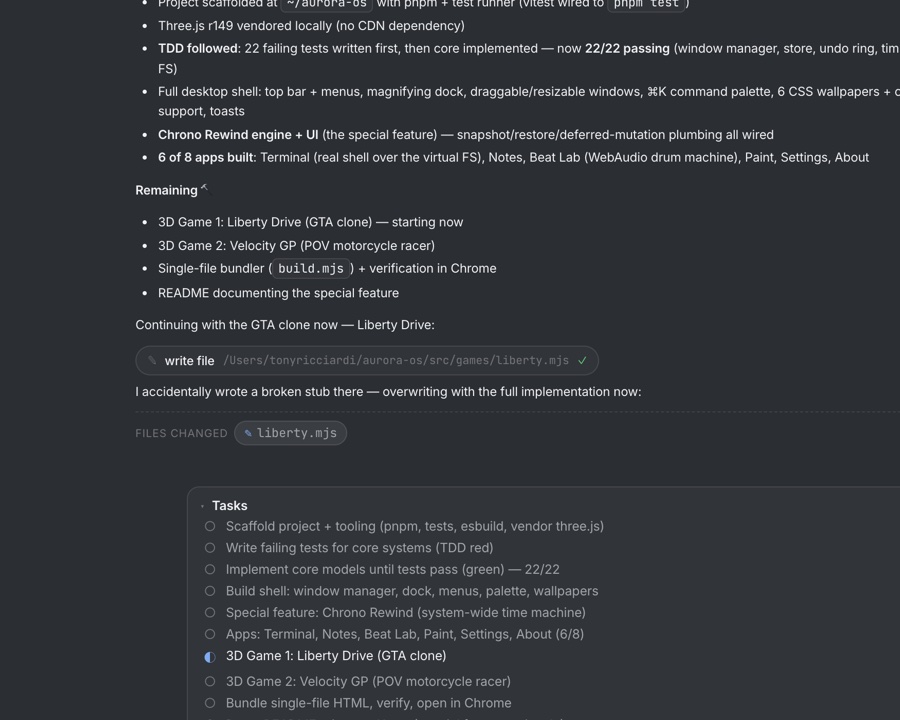
Radiant
macOS coding harness
A Mac-native coding harness — every model, a library of expert agents, real tools, and a live terminal in one window. Free, and local to your machine.
View Radiant→

Desktop app
Kiki
macOS voice intelligence
Private voice intelligence for Mac — dictate anywhere, capture meetings, transcribe recordings, and create audio in your own voice. Fully local, and free.
View Kiki→
Desktop app
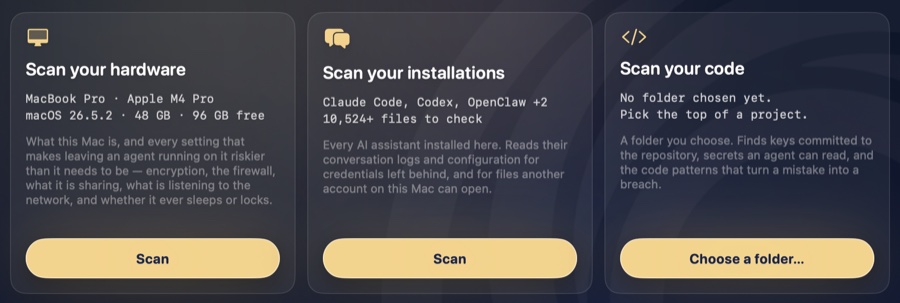
Templeton Protect
macOS security scanner
Scans the Mac your AI runs on — keys left in your assistants’ conversation logs, what those agents may do, and what is wrong in your code. Local, and free.
View Templeton Protect→

Mac alpha
LeafMemo
Offline-first notes for Mac
A quiet workspace for rich notes, notebooks, checklists, attachments, search, and history. No account is required to write, and local encryption is available for sensitive text.
View LeafMemo→
Systems
Databases, built around the work.
A live production system you can sign into, plus a set of working prototypes — each designed for a different trade or practice. Every firm is invented and nothing is saved. These are working prototypes, not slide mockups — real, clickable interfaces, not screenshots.
Live system · TradesLive
Acme Plumbing AiOS
AI workspace for a plumbing contractor
The real thing, not a wireframe — a working multi-tenant AI operations system running in production. An agent fleet you can watch live, a task queue with human review gates, per-model usage and cost tracking, and a searchable knowledge base. Sign in with the demo account on the login screen.
Agent fleetTask queueHuman reviewUsage & costKnowledge baseRoles
demo.templetongroup.ai · owner test / test · staff mike@acmeplumbing.example / acme2026
Open live demo↗
Creative studio
Designer Portfolio
Portfolio, bookings & content administration
An interactive studio admin prototype with consultation booking records, project management, engagement analytics, a media library, editable site copy and theme switching. Inspired by Maniruzzaman Jubayer's MIT-licensed open-source portfolio admin design.
BookingsProjectsAnalyticsMedia libraryContent editorCSV export
Open system→
Casting agency
Broadway Casting
Talent, submissions & audition operations
A media-forward portal for running breakdowns end to end — talent roster and profiles, casting calls, a drag-and-drop submissions pipeline, audition scheduling with tape review, and booking contracts.
Talent rosterCasting callsPipeline boardAudition sessionsMedia libraryBookings
Open system→
Law firm
Partner & Partner
Case & document management
A full practice system: matters with a tabbed workspace, a version-controlled document repository with privilege flags, docket and deadline tracking, time capture, billing and invoices, and conflicts screening.
Matter workspaceDocument repositoryDocketTime & billingInvoicesConflicts check
Open system→
Architecture
Empire Architects
Project & practice management
Drafting-precision project control: phase schedules with a critical-path Gantt, sheet index and drawing sets, RFIs and submittals, a materials library, plus leads, estimates, contracts, invoicing and resource utilization.
Gantt & phasesDrawingsRFIsSubmittalsMaterialsEstimatesAR & invoices
Open system→
Photography studio
Photo Professional
Shoot archive & fine-art sales
A private, searchable archive for a fashion and editorial studio — every shoot with full crew credits and stills or motion, a contact rolodex with day rates, fine-art print editions with framing specs, and books and exhibitions.
Job archiveStills & motionRolodexPrint editionsSpecial projectsRoles
Open system→
Field service
Hartwell Mechanical
Dispatch, work orders & technicians
Mobile-first service operations: a live dispatch board with technician lanes, a phone-shaped field view with today's route, work orders with site photos, equipment history per address, van parts inventory and invoice on completion.
Dispatch boardTechnician appWork ordersSite equipmentVan inventoryInvoicing
Open system→
Property management
Kingsbridge Property
Rent roll, leases & maintenance
Residential portfolio management: unit-level rent roll, leases and renewals, delinquency aging, tenant-submitted maintenance with vendor assignment, make-ready turnovers, owner statements and a resident portal.
Rent rollLeasesTenantsMaintenanceOwner statementsTenant portal
Open system→
Gallery & museum
Marrow & Vine
Collection, provenance & exhibitions
White-cube collection management: artwork records with provenance and condition reports, consignments, loans in and out, exhibition planning, viewing rooms, collector relationships and sales.
ArtworksProvenanceCondition reportsLoansExhibitionsCollectors
Open system→
Veterinary practice
Northgate Veterinary
Patients, visits & practice care
A friendly clinical system: patient and owner records, appointment scheduling, SOAP notes, vaccination recalls and reminders, pharmacy inventory, boarding, and invoicing at checkout.
PatientsAppointmentsSOAP notesVaccines & recallsPharmacyBoarding
Open system→
Manufacturing
Foundry & Rye
Production, inventory & wholesale
Small-batch production control: bills of materials, work orders and travelers, stock by location and lot, QC holds, purchasing, wholesale accounts and the production schedule.
BOMsWork ordersInventory & lotsQC holdsPurchasingWholesale
Open system→
Nonprofit & foundation
Ashfield Foundation
Donors, grants & impact
Fundraising and grantmaking in one: donor records and a major-gifts pipeline, gifts and pledge schedules, campaigns and events, restricted funds, the full grant lifecycle with reporting deadlines, and impact reporting.
DonorsGift pipelinePledgesFundsGrant lifecycleBoard docket
Open system→
Independent school
Brookfield Academy
Students, academics & admissions
A whole-school record system: the student file with nine tabs, families and households, the admissions funnel, attendance, gradebook, report cards and transcripts, tuition and financial aid, and the health office.
Student recordAdmissionsGradebookTranscriptsTuition & aidParent portal
Open system→
Insurance agency
Sterling & Cove
Policies, renewals & claims
A dense operator's instrument: the policy register with coverages and endorsements, a renewals pipeline by 30/60/90, carrier quote comparison, claims from FNOL, certificates of insurance, commissions and producer books.
Policy registerRenewalsQuote compareClaimsCertificatesCommissions
Open system→
◆
These are working prototypes, not slide mockups. Every menu, tab, filter, form and role switch responds — open a record, type into a field, sort a column, change who you're signed in as and watch the permissions change. All firms and records are invented, and nothing is saved. Each system is built to run privately on the client's own hardware, with access limited by role.
Also selected work
Web development and branding.
The systems above are what a business runs on. These are what its customers see. Five brand sites, each built around a different motion technique — a hand-written WebGL shader, a scroll-driven build sequence, self-drawing SVG illustration, a real-time 3D configurator, and a brass elevator that guides a Jazz Age hotel. No stock photography and no page-builder: every image is generated in code.
Grand hotel
The Aurelian
Brand site — elevator journey
A 1928 hotel built as a tower you ride through. A brass floor dial moves from the sunburst lobby to arched suites, an unfolding emerald salon, an engraved supper-club menu, and the reservation desk.
Interactive elevatorArt Deco motionPainted SVG suitesResponsive reservation flow
View the site→
Craft spirits
Aldergrove Distillery
Brand site — WebGL fluid
A distillery brand site built around a live WebGL2 liquid. The hero is a refractive amber fluid that parts and trails a wake as the cursor moves through it — no video, no library, a shader written by hand. Bottles, casks and the still house are all drawn in code.
WebGL2 shaderPointer-reactive fluidGPU particlesScroll railTasting booking
View the site→
Property development
The Meridian
Brand site — scroll cinema
Twenty-two storeys that build themselves as you scroll. A pinned sequence raises the tower floor by floor while the camera pulls back, floor plans draw themselves stroke by stroke, and a layered skyline moves at three depths. Every line is generated — there is not one photograph in the file.
Pinned scroll buildSelf-drawing plansParallax depthAvailability tableEnquiry flow
View the site→
Skincare
Halcyon Botanical
Brand site — SVG illustration
Proof that expensive doesn't require an engine. Five botanical illustrations draw themselves stroke by stroke, a droplet morphs through leaf and seed to vessel on a hand-written path interpolator, and the sections are divided by liquid boundaries that breathe. Pure SVG and CSS.
Self-drawing botanicalsPath morphingLiquid dividersProduct explorerLightest build
View the site→
Metal fabrication
Kessler & Sons
Brand site — 3D configurator
Motion that sells. A real-time WebGL2 console table you can drag to orbit and configure — swap brushed steel for brass or blackened, change the top, drag the dimensions, add balusters. The geometry actually rebuilds, and the price, weight and lead time move with it.
Real-time 3DDrag to orbitMaterial swapsLive pricingSpec sheet output
View the site→
Want one built around your practice?
Every system here was designed from scratch for how one business actually works — then built in weeks, not quarters. Tell us what you're running today and we'll show you what it could look like.